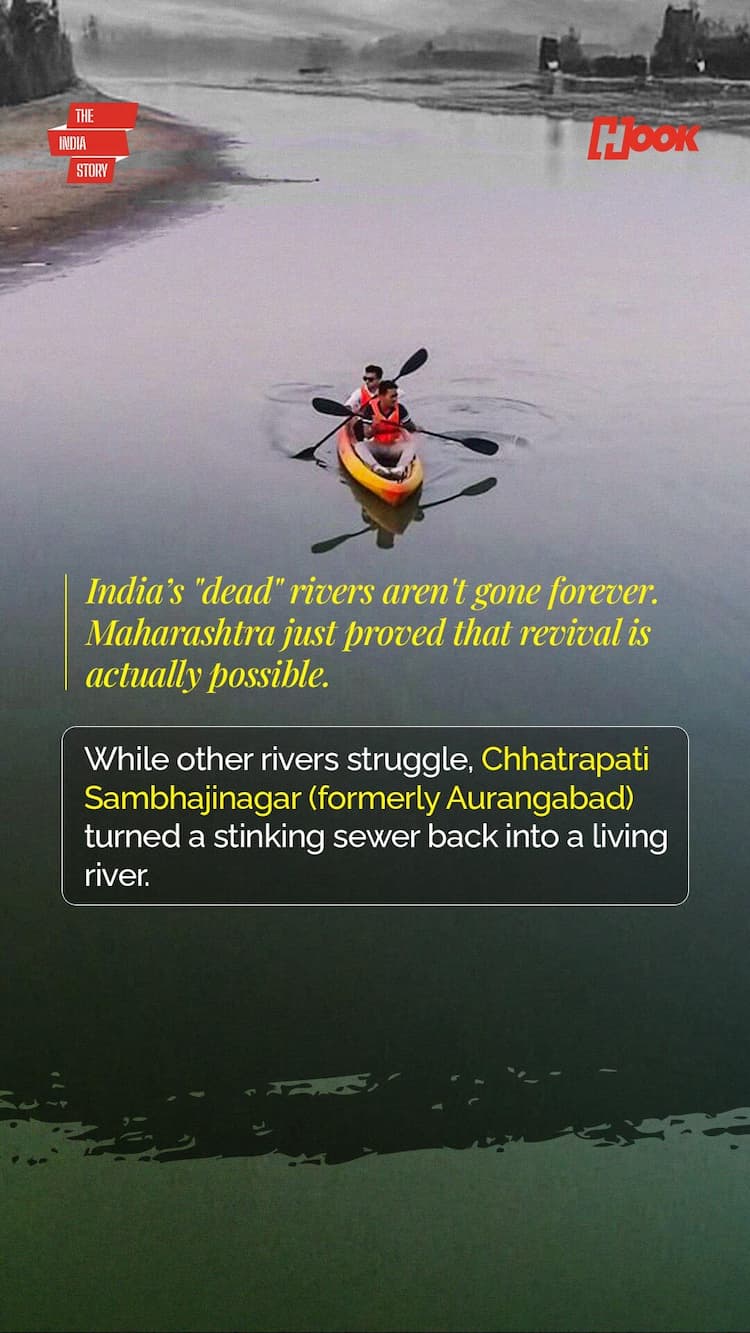
In the very center of Chhatrapati Sambhajinagar, or Aurangabad as it was known until recently, runs a tale of restoration that is sorely needed in many Indian cities. The Kham River, which was a seasonal river that gave the city its Mughal-era character, had by 2020 been converted into a poisonous drain.
Choked with sewage, plastic, and textile materials, its 8.8 km-long course through the city had turned into a septic ‘nullah’. Biodiversity was lost, and the river that gave the city its name seemed to be on the brink of extinction.
But in only five years, a passionate and collective effort turned the tide, regenerating 1.24 lakh square meters of polluted land into lush green areas. The Kham River restoration is now being recognized as a model for cities like Delhi, which are struggling with dying rivers like Yamuna.
Diagnosing The Crisis With Technology
The initial step was to grasp the extent of the crisis. Drone mapping identified a staggering 249 waste discharge points emptying into the river. In the city, there were 170 illegal dumping spots spilling plastic and industrial waste into the river. Untreated sewage contributed to flooding and the collapse of the ecosystem – a crisis that was similar to the Yamuna River in Delhi and other cities in India.
With the data in hand, the municipal corporation transitioned from diagnosing the crisis to treating it. Six plastic traps were erected at strategic points to capture the floating plastic waste. The authorities blocked 24 bridges to prevent direct dumping. Upstream efforts ensured that the flow of waste was reduced at the point of origin and not just at the point of cleanup.
Engineering The Rivers Recovery
The main component of the revival was infrastructure upgrades. Sewage lines were redirected to existing treatment plants and a modular sewage treatment unit and settling ponds were there to support the process. Because textile waste was such a big polluting factor, it was sent to a completely isolated upstream treatment plant.
Huge dredging operations removed layers of sludge and garbage accumulated over decades. During the excavation, workers came across an amazing find: 16 buried freshwater springs. The restoring of these springs helped the river to get its natural flow back.
In addition, 5.3 km of the riverbanks were physically divided, given new soil, and covered with vegetation. To speed up nature's recovery, besides planting native trees, Miyawaki forests were created. Besides adding biodiversity and providing a living classroom, this unique state, wise tree gallery is beautifully restored to its natural condition.
Citizens Are The Change
Technically, the engineering was only able to revive the rivers body, it was the community moisture and love which brought the soul back.
Municipal Commissioner Astik Kumar Pandey conducted weekly Saturday clean, up drives which were attended by 200-300 residents each week. Through the 'Takatak' campaigns, the citizens not only physically removed the waste, but also promoted segregation of waste at the source.
More hands, more hope!
Institutional partnerships gave a great momentum to the initiative. Varroc Foundation, EcoSattva and Rainmatter Foundation were instrumental in supporting the activities of tree plantations, creating an eco, park such as Rashi Van, and conducting large, scale awareness programmes. More than 100,000 saplings were planted due to citizen involvement, costs were minimal when compared to outsourced clean, up contracts.
Measurable Impact On Ecology And Economy
The positive impact on ecology was immediate and tangible. The Biochemical Oxygen Demand increased sufficiently for the treated water to be reused for irrigation. The city remained flood-free for two consecutive years.
More than 50,000 sq. m of land was reclaimed as green areas. Close to three lakh people benefited from better waste management systems. Wildlife, ranging from turtles to bird species, started migrating back, and riverbank areas were transformed into fun zones.
The initiative brought Kham River into the Namami Gange network and is now being implemented on a larger scale through the BRAM model by EcoSattva.
What Delhi And India Can Learn
The Kham River experience demonstrates that the restoration of an urban river is more than just a green vision – it is a reality that can be achieved through administrative, technological, and social means. As Zerodha co-founder Nithin Kamath said while supporting the cause, “Such models can be replicated for air pollution in Delhi or Mumbai’s waste management crisis.”
Aurangabad’s success story is loud and clear: even a dead river can be made to flow again when governments, corporations, NGOs, and citizens come together.