








If you're planning on buying a car, here's some great news: it just got cheaper! The GST Council has revamped GST rates for various categories of cars, offering festive season relief for buyers.
Starting September 22, small cars will attract a reduced GST rate of 18%, down from the earlier 28%. But not all cars get a price drop, some now carry a heavier tax burden. Let’s break down what this means for you and how much you can save or expect to pay more.
The GST Council has adjusted tax rates on motor vehicles primarily based on engine capacity, fuel type, and vehicle length. These changes aim to encourage smaller, more efficient cars.
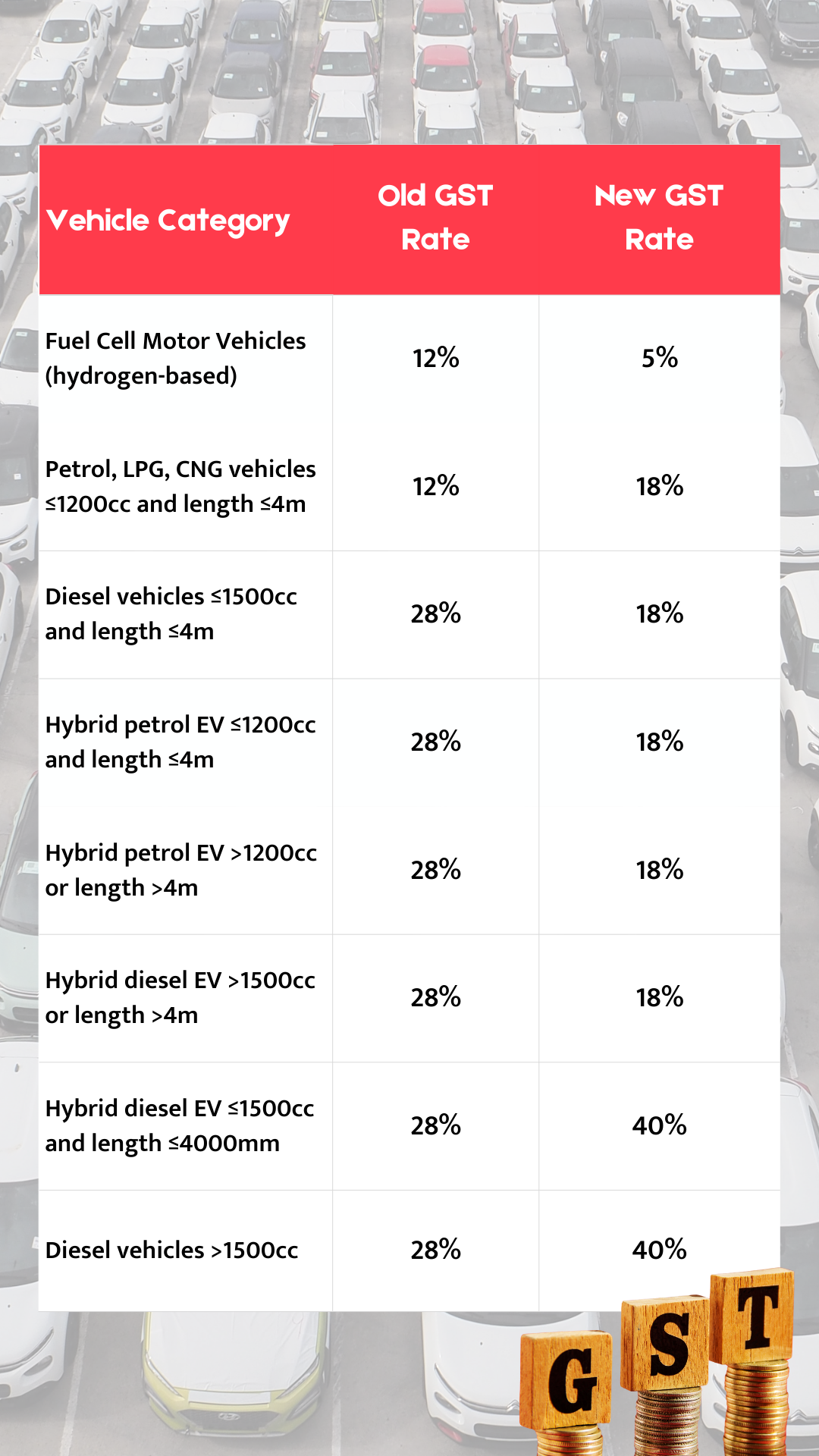
For small cars the tax rate has been slashed from 28% to 18%.
Small Petrol Cars: These include petrol cars with engines under 1200cc and a length under 4 meters. Expect price drops between ₹30,000 to ₹80,000 on models like Maruti Suzuki Swift, Hyundai i10 Nios, Tata Tiago, Renault Kwid, and Tata Punch.
Small Diesel Cars: Diesel cars with engine capacities up to 1500cc and compact lengths now attract 18% GST. Popular models benefiting include smaller variants of Hyundai Venue, Tata Altroz diesel, and Maruti Baleno diesel.
Bigger cars like SUVs and luxury vehicles now attract a higher GST rate of 40%, up from 28% earlier. Cars with engines above 1500cc and over 4 meters long now attract 40% GST. This means models such as Hyundai Creta, Mahindra Scorpio N, Toyota Innova Hycross Hybrid are now in the higher GST category.
But here’s the twist. Previously, these vehicles were taxed at 28% GST plus a hefty compensation cess of 17-22%, making the total tax burden nearly 50%. While the GST hike to 40% may seem steep, the good news is that the compensation cess has been abolished. This removal of cess effectively lowers the overall tax impact, making these vehicles ultimately cheaper than before. So, despite the apparent GST increase, buyers of luxury and large vehicles can expect some relief.
So, whether you’re eyeing a budget hatchback or dreaming of an SUV, your wallet’s in for a festive ride!