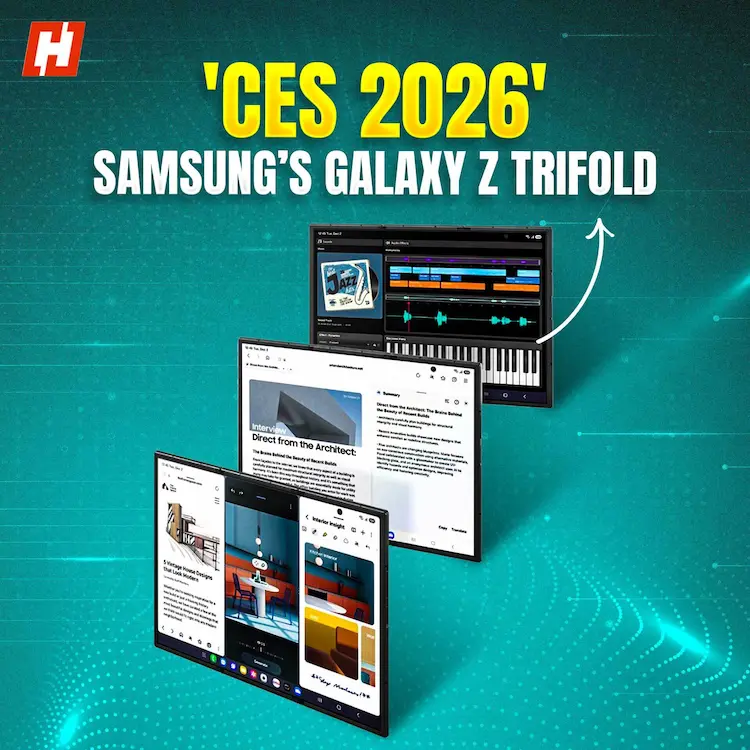
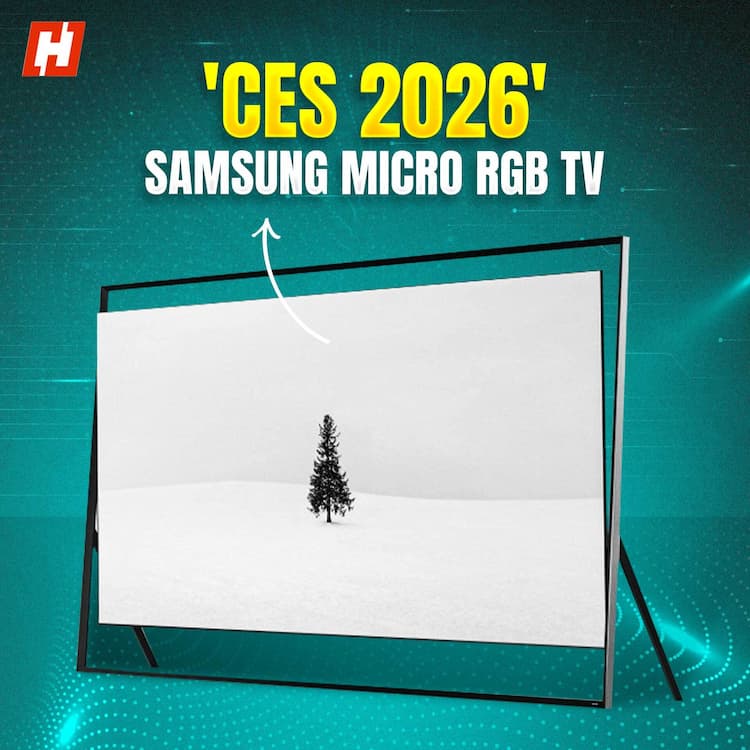
At CES 2026, Samsung didn’t just show off another big screen. It quietly redefined what a screen can even be.
While most brands were busy shouting specs, Samsung took a softer, cooler route with its Transparent Micro LED. The pitch wasn’t about size wars or refresh rates. It was about flexibility. About screens that don’t dominate a room, but dissolve into it. Think less “TV on a wall” and more “glass that happens to glow.”
And honestly? That shift matters.
A screen that disappears when you don’t need it
The first thing you notice about Samsung’s Transparent Micro LED is what you don’t see. When it’s off, it looks like a clean sheet of glass. No black slab. No bulky frame screaming “home theatre.” Just transparency.
Turn it on, and visuals appear to float mid-air. Text, videos, art — all hovering like holograms without actually being holograms. It’s the kind of tech that makes you do a double take, then immediately imagine it in a futuristic apartment, a luxury store, or a minimalist café.
Samsung calls this a “true glass-like appearance,” but Gen Z translation? It’s a screen that knows when to stay quiet.
Flexibility is the real flex
Here’s where Samsung really leaned in. Instead of obsessing over one massive TV size, the company talked about design freedom without size constraints.
That means this display isn’t locked into one shape or purpose. It can be scaled, customised, and potentially used across walls, windows, partitions, or multi-panel setups. The screen adapts to the space, not the other way around.
This is a big deal because screens today still demand attention. They own the room. Samsung’s vision flips that dynamic. The display becomes part of the architecture. Almost invisible until you want it to perform.
For a generation that loves clean setups, aesthetic homes, and tech that blends in rather than sticks out, this feels very on-trend.
Why Micro LED makes this possible
Transparent displays aren’t new. Transparent OLEDs already exist. But they come with compromises, especially around brightness and clarity.
Micro LED changes that.
Because each pixel emits its own light, Samsung doesn’t need a bulky backlight or rear light-blocking structure. That means higher brightness, better contrast, and clearer visuals — even in well-lit spaces.
In simple terms: You don’t have to dim your entire room just to see what’s on screen.
Samsung hinted that this makes Transparent Micro LED far more practical for real environments, not just demo booths. Homes. Retail. Galleries. Maybe even offices that don’t want black screens killing the vibe.
This isn’t about watching Netflix
Let’s be real. This isn’t the TV you buy just to binge shows.
Samsung’s Transparent Micro LED feels like a statement about where screens are headed. Less “entertainment box.” More “ambient interface.” A screen that can show art during the day, information when needed, and entertainment when you want — without constantly reminding you it exists.
It’s tech designed for people who care as much about how their space feels as how sharp their display looks.
The bigger picture
Samsung’s message was subtle but clear at CES 2026. The future of displays isn’t just brighter. It’s also quieter.
Transparent Micro LED isn’t about replacing your TV tomorrow. It’s about reimagining screens as part of our surroundings, not distractions sitting on top of them.
And if this is where display tech is headed, the era of giant black rectangles might finally be on its way out.