India's paparazzi culture has become a fascinating, sometimes controversial part of our media landscape. Be it funerals, celebrity birthdays or a Diwali parties, the paps are everywhere, and they see everything. While most celebrity spottings are informed, sometimes the line between capturing a moment and the invasion of one's privacy becomes blurred. How does this phenomenon affect celebrities? Where did it all begin? Let's delve into the origins, the major moments, and the impact of this ever-growing phenomenon in Indian media.
The term "paparazzo" originated from the 1960 Italian film 'La Dolce Vita', where a relentless photographer, named Paparazzo, chased after celebrities. This character would shape the image of modern-day paparazzi across the world. Over the years, the term gained popularity in the West and received huge backlash after a frenzied car chase in Paris led to the death of Princess Diana in 1997. While many criticised the photographers and some even got arrested, the paparazzi culture continued to grow.
How Did The Paparazzi Culture Start In India?
In Mumbai, popular photographer Yogen Shah is regarded as India’s first paparazzo. In an interview with Indian Express, Yogen revealed how his journey as a paparazzo began at Subhash Ghai’s daughter, Meghna’s wedding in 2002. Talking about the day, Shah revealed that he was not allowed to cover the wedding, but instead of leaving the venue empty-handed, he took pictures of celebrities entering and exiting the venue. These pictures went viral the next day!
Soon the pap culture took off in India and along with Shah, other photographers such as Manav Manglani, Viral Bhayani and Varinder Chawla entered the scene. To get a better understanding of how the paps in India work, we at Editorji spoke to paparazzo Bablu, who told us in detail how the pap culture has changed over the years.
In his chat with us, the photographer revealed that 90 per cent of celebrity spottings are informed as opposed to earlier times when such information was not readily available.
He said, "Pehle ek alag pattern pe hota tha saari cheezein. Ab toh cheezein bohot hi badal gayi hain, bohot cheezein fast hogayi hain. Pehle hum aaramse shoot karte the...paparazzi ka itna culture bhi nahi tha. 10-15 saal pehle kabhi kabhi kuch kuch logo ki spotting hoti thi. Abhi din mein 20-30 spotting hoti hain, already informed spotting hoti hain. Pehle itna information bhi nahi hota tha ki yaha jaa rahe hain, waha jaa rahe hain. Abhi 90 per cent informed spotting hota hain." (Earlier, celebrities followed a different pattern, things have drastically changed and have become faster. We shot at pace earlier, 10-15 years back only a few celebrity spottings happened, now on a daily basis we have 20-30 spottings. Now 90 per cent of spottings are informed, earlier we did not have access to such information.)
He further revealed, "Itna fast bhi nahi tha. Pehle cheezien hoti thi, hum bhejte the, hum story file karte the, abhi within 5-10 minutes cheezien upload ho jaati hain, sabko pata ho jata hai, clients ko hume turant bhejna padta hai. Pattern ekdum se change hogaya hain." (Things are way faster now. Earlier we used to send the pictures, they used to get filed. Now, everything from clicking to uploading happens in 5-10 minutes. The pattern has suddenly changed.)
How Does Pap Culture Impact Celebrity Lives?
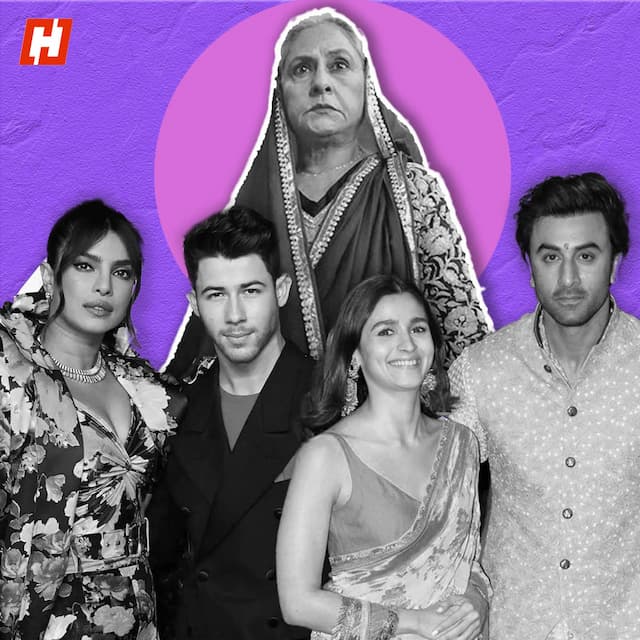
As interest in celebs grew, so did the demand for content—often crossing into personal spaces. The lines between a good story and invasion of privacy blurred, with incidents like Alia Bhatt's privacy breach sparking debate.
Alia had taken to Instagram and called out a publication for publishing private pictures clicked of her, while she was inside her residence in Bandra, without her consent. The actor was spending a peaceful time at her home when her privacy was breached and she felt like 'something watching' her. After Alia's post, many from the film industry including Anushka Sharma, Karan Johar, Janhvi Kapoor, and Soni Razdan condemned the incident.
Some celebrities, like Anushka Sharma and Virat Kohli, have publicly appealed for privacy concerning their children. This raises questions: What are the limits? How can we redefine respectful boundaries?
We also spoke to Dr Prerna Maheshwari, a Consultant Psychiatrist at Manosuraksha Mental Health Clinic and Foundation, who gave us insights into how the paparazzi culture affects celebrities' lives.
She told us, "While this might seem harmless from the outside, the deeper reality often shows that it can be very damaging. This directly affects the celebrity and their children. Firstly the lack of privacy that celebrities experience pushes them under a microscope, where every action of theirs is being judged, which can create pressure to live up to an idealised image often by unrealistic standards. Over time this environment not only impacts their self-esteem but can also create this habit of putting their behaviour and lives under a microscope in their mind."
While fueled by media and photographers, the paparazzi culture also reflects society’s appetite for celebrity lives. As laws evolve and more celebrities speak out, the public’s role is just as vital in respecting these boundaries. As paparazzi culture continues to evolve, will the industry find a balance? Do you think paparazzi need to set limits, or is this simply a cost of fame?